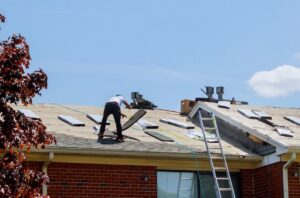
Most roof replacements in the Des Moines metro do not begin with a homeowner deciding it is finally time for a new roof. They begin with a hailstorm, a line of straight-line winds, or a tornado warning, followed the next morning by a phone call to an insurance company. Filing a roof insurance claim in Iowa is not complicated once you understand the sequence, but the process is unforgiving of small mistakes: a photo nobody took, a report filed three months late, a damage scope nobody checked line by line. This guide walks through each stage in order, shows where claims typically stall, and explains the parts of Iowa law that determine what your roofing contractor is allowed to do on your behalf.
Key Takeaways
Four decisions shape the outcome of most roof claims more than anything else:
- Take your own dated ground-level photos and video before you contact your insurer, so the damage is tied clearly to a specific storm.
- Have a roofing contractor on site during the adjuster’s inspection to point out and document damage. This is the step homeowners skip most often.
- Know whether your policy pays replacement cost value or actual cash value, and check whether a separate, higher wind and hail deductible applies.
- Claims usually get delayed or denied over late reporting, thin documentation, or an incomplete scope, not over whether the damage was real.
Step One: Document the Damage Before You Call Anyone
Before you open a claim, walk the property and record everything that looks wrong. Do this from the ground with a phone camera or a zoom lens rather than climbing onto the roof yourself, which is both dangerous and unnecessary at this stage. Adjusters look for a clean timeline connecting damage to a specific storm date, and photos taken within days of the event are among the strongest evidence a homeowner can produce.
Focus your documentation on these areas:
- Gutters, downspouts, and gutter aprons, where hail dents are easiest to see from the ground.
- Soft metals such as vents, flashing, chimney caps, and any aluminum siding or window wraps.
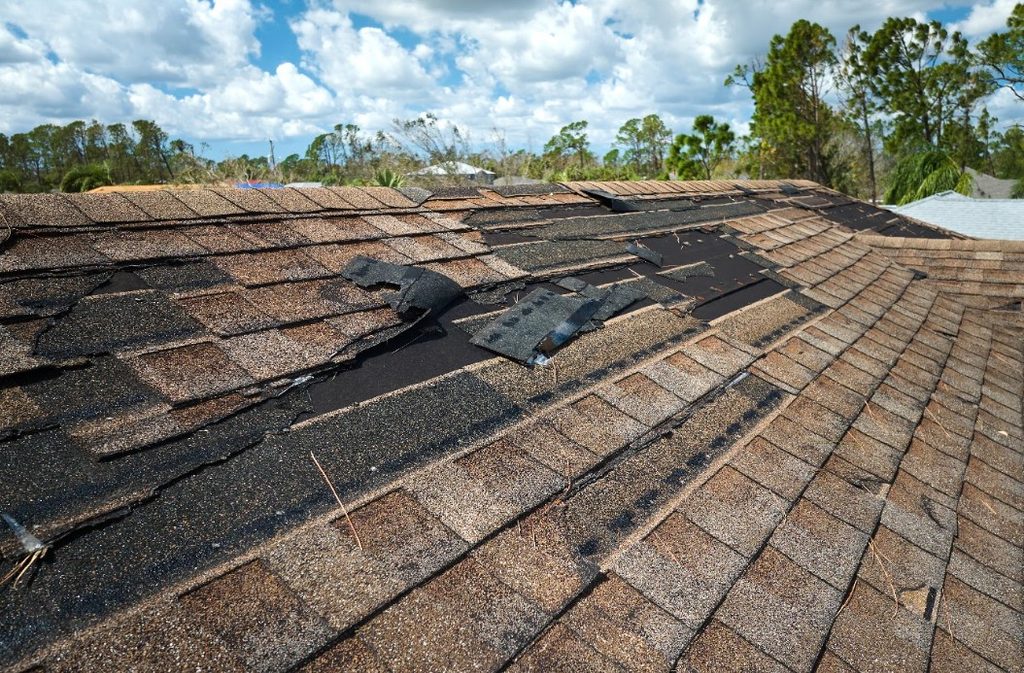
- Shingles that are missing, lifted, creased, or curled, especially along ridges and rake edges.
- Screens, garage doors, decking, grills, and air conditioner fins, which corroborate hail size.
- Interior ceilings and attic decking, photographed if you see staining or daylight.
- Yard debris from the storm itself, which helps establish wind direction and severity.
Save the files in one folder labeled with the storm date. Take a short video walking the perimeter and narrate what you are seeing with the date spoken aloud. Screenshot a local weather report or radar image from that day and keep it with the photos.
Step Two: Get a Professional Roof Inspection
A homeowner can spot the obvious problems from the ground, but hail bruising, lifted shingle tabs, fractured mats, and broken sealant strips are rarely visible without someone physically on the roof. Damage that goes unreported does not stop existing. It keeps working on the roof system and often surfaces as a leak long after the claim window has closed.
When you book an inspection, ask how the findings will be documented. A report written the way an adjuster expects should include photographs tied to specific roof slopes, test squares marking hail strike density, a written description of each damage type, and a clear statement distinguishing storm damage from ordinary wear. Ask for a copy of that report in writing before the adjuster’s visit, not after.
Step Three: File the Claim With Your Insurance Company
Once you have documentation in hand, call your insurer or file through their app or website to open the claim. Have your policy number, the date of loss, and a general description of the damage ready. The insurer will issue a claim number, assign an adjuster, and schedule an inspection, which may be in person or virtual depending on the carrier and how widespread the storm was.
Keep the description factual and avoid speculating about cause or cost during that first call. Write down the name of the representative, the date, and the claim number. Then ask three questions before you hang up: what your deductible is for this loss, whether the policy is replacement cost or actual cash value, and whether any deadline applies to completing the work.
Step Four: Meet the Adjuster With Your Roofer On Site
This is the step homeowners most often skip, and it changes outcomes more than any other. An insurance adjuster assesses damage on behalf of the insurance company, and after a widespread storm a single adjuster may be working through a very high volume of inspections in a short window. Having a roofing professional present means someone who works on roof systems every day is there to point out documented damage and answer technical questions in real time. That matters most on complex roofs with multiple slopes, valleys, and older shingles, where storm damage and age-related wear can look similar to an untrained eye.
One important distinction under Iowa law: your contractor can be present, can point out damage, and can document what they find, but they cannot negotiate the claim for you. Iowa Code section 103A.71 prohibits a residential contractor from representing or negotiating on behalf of a property owner on any insurance claim connected to roof or other exterior work, or from offering or advertising to do so. You remain the person who talks terms with your carrier. A good contractor supports that conversation with evidence rather than replacing you in it.
What Iowa Law and Iowa Policies Mean for Your Claim
Coverage details vary by carrier, but a handful of provisions come up in nearly every Iowa roof claim. Understanding them before the adjuster arrives keeps you from being surprised by the settlement figure.
Replacement Cost Value Versus Actual Cash Value
Replacement cost value policies pay what it actually costs to replace your roof with new materials of like kind and quality. Actual cash value policies subtract depreciation for the roof’s age, which can produce a significantly smaller payout on a fifteen-year-old roof. Some carriers also apply a roof payment schedule that steps down coverage as the roof ages, even on an otherwise replacement cost policy. Your declarations page and any roof endorsement will say which applies.
Your Wind and Hail Deductible
Many Iowa policies carry a separate wind and hail deductible that is higher than the standard deductible, often expressed as a percentage of your dwelling coverage rather than a flat dollar figure. On a home insured for $400,000, a 2 percent wind and hail deductible is $8,000, not the $1,000 many homeowners assume. Check your declarations page before you file so you know whether a claim makes financial sense.
What Iowa Law Says About Contractors and Deductibles
Iowa regulates storm repair contracts closely, and the rules exist to protect homeowners. Under Iowa Code 103A.71, a storm repair contract is void if the contractor advertises or promises to rebate any part of your insurance deductible, or represents, negotiates, or offers to negotiate with your insurer on your behalf. Any company offering a “free roof” or promising to make your deductible disappear is offering you a contract state law will not enforce. Contractors doing catastrophe repair work must also give you a completed written notice, in at least ten-point bold type, spelling out your obligations and rights under the contract.
Be equally careful with any document assigning your insurance benefits to a contractor. Iowa law gives a named insured the right to cancel a post-loss assignment without penalty for any reason within five business days of receiving a copy of the fully executed agreement, in writing, and the contractor must return any payments or deposits within ten business days of that cancellation.
Common Reasons Roof Claims Get Delayed or Denied
Denials rarely hinge on whether a storm happened. They hinge on proof, timing, and scope. These are the patterns that cause the most trouble:
- Late reporting. Damage reported months after the storm is harder to tie to a specific weather event.
- Thin documentation. Photos that do not clearly show location, scale, or extent give an adjuster little to work with.
- Storm damage confused with wear. Older roofs near the end of their service life draw extra scrutiny, which is exactly why test squares and slope-by-slope photos matter.
- No one present at the inspection. If nobody points out damage on the back slope, the back slope may not make it into the estimate.
- Underestimated scope. Valleys, step flashing, pipe boots, and the underside of ridge caps are easy to miss on a fast walkthrough.
- Unrepaired prior damage. Carriers may deny new claims for damage they already paid on and you never fixed.
What to Expect After the Claim Is Approved
Once the claim is approved you will receive a settlement based on your policy type, less your deductible. Replacement cost value policies typically pay in two installments: an initial check for the actual cash value of the damage, and a second recoverable depreciation payment released after the work is finished and you submit a final invoice.
Two details are worth confirming in writing before any work starts. First, ask your adjuster exactly what triggers release of the recoverable depreciation and what documentation they need. Second, ask whether your policy sets a deadline for completing the repairs, since many do, and depreciation left unclaimed past that date is generally gone. If your mortgage company is listed on the check, contact your loan servicer early, because their endorsement process can add weeks.
Documents to Keep Throughout the Claims Process
A roof claim generates paperwork quickly, and organized homeowners move through supplement requests and payout questions noticeably faster. Keep all of the following in one folder, physical or digital:
- Your policy declarations page, showing coverage type, deductible amounts, and any separate wind and hail deductible.
- Dated photos and video, organized by the date taken relative to the storm.
- Your claim number and the adjuster’s direct contact information.
- The adjuster’s written damage report and full line-item estimate, requested as a PDF.
- Your contractor’s itemized written estimate, structured to match the insurer’s line items as closely as possible.
- Every email, letter, and a dated log of phone calls with names and what was discussed.
- Signed contracts, change orders, material delivery tickets, and the final invoice.
Understanding a Supplemental Claim
A supplement is a request to add damage or cost to a claim after the initial estimate has been issued. It is a routine part of property claims, not a sign that something went wrong during the first inspection. Supplements commonly arise when tear-off reveals damaged decking hidden beneath the old shingles, when code requirements such as ice and water shield or updated ventilation apply, or when material and labor pricing has shifted since the original estimate was written.
Documentation determines how fast a supplement moves. Photographs taken during tear-off, invoices for the additional materials, a written explanation tying the new damage to the same storm, and line items that speak the insurer’s estimating language all shorten the review. Vague requests without photos are the ones that sit for weeks.
Frequently Asked Questions
How long do I have to file a roof insurance claim in Iowa after a storm?
Deadlines depend on your policy language, so check your declarations page. As a practical matter, document the damage and open the claim as soon as you find it. Waiting months makes it substantially harder to prove the damage came from a specific storm rather than gradual wear.
Will my insurance rates go up if I file a roof claim?
That depends on your carrier and your overall claims history. Weather-related claims are generally treated differently than claims involving homeowner negligence, and widespread storm events often affect rates across an entire region regardless of whether you filed. Ask your agent directly how a claim would affect your specific policy.
Do I have to use the contractor my insurance company recommends?
No. You have the right to choose your own licensed roofing contractor for insurance-related repairs or replacement. Preferred-vendor programs are a convenience offered by the carrier, not a requirement.
What is the difference between replacement cost value and actual cash value coverage?
Replacement cost value pays what it costs to replace your roof with new materials. Actual cash value subtracts depreciation based on the roof’s age, which usually means a smaller initial payout on an older roof.
What if the insurance adjuster’s estimate is lower than my contractor’s quote?
This is common and usually solvable. Your contractor can document the difference and submit a supplement with photos and itemized pricing, which the carrier reviews before adjusting the payout. Compare the two estimates line by line first, since gaps are often missing items rather than disputed prices.
Can a roofing contractor pay or waive my deductible?
No. Iowa law prohibits contractors from advertising or promising to rebate any part of your deductible, and a contract that does so is void. Your deductible is your responsibility, and any company suggesting otherwise is telling you something that should end the conversation.
Get a Professional Inspection Before You File
A roof claim is won or lost on documentation, and the best documentation is gathered before the adjuster ever pulls into the driveway. A professional inspection completed before or alongside your claim gives you a clear, slope-by-slope record of what the storm did, which is exactly what a carrier needs in order to fund a complete repair rather than a partial one. Titan Roofing and Exteriors works with homeowners across the Des Moines metro on storm-related roof damage, from the initial inspection through the adjuster visit to final installation, and everything we document goes to you in writing.
Contact Titan Roofing and Exteriors to schedule a free roof inspection today.