Fall is one of the smartest windows of the year to get a roof looked at in the Des Moines metro. It falls after peak hail and wind season, when summer storms have already done whatever damage they were going to do, and before the first meaningful snow load puts weight on anything that has been quietly compromised since June. A drone roof inspection gives you and your contractor a far more complete picture than a ground-level walk-around, and it does it without anyone standing on shingles that may already be damaged. This guide covers what the flight actually captures, what the resulting imagery is worth during an insurance claim, the federal rules a legitimate operator has to follow, and the specific questions worth asking before you book one.
Key Takeaways
A few points explain most of the difference between an aerial inspection and a conventional one:
- A drone captures close-up imagery of every slope, valley, ridge, and penetration point, including the back-slope areas a ground-level look never reaches.
- Organized, section-by-section aerial photography gives an insurance adjuster a complete visual record instead of a handful of distant shots.
- Nobody has to walk a roof that may already be structurally compromised, which matters most on steep-pitch and multi-story homes.
- Commercial drone work requires an FAA Part 107 certificate, aircraft registration, and Remote ID compliance, so those are fair things to ask about.
What a Drone Inspection Actually Captures
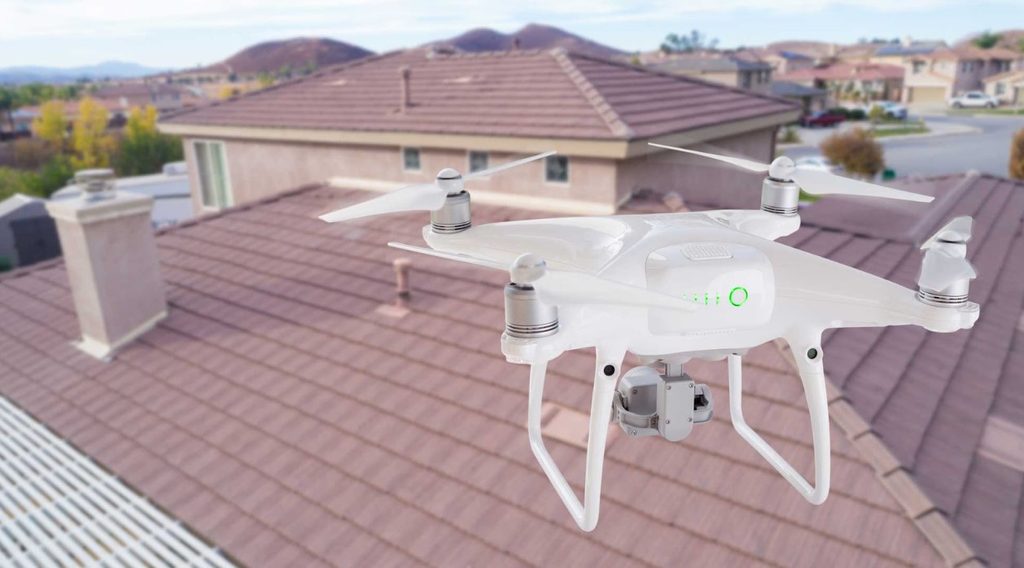
A drone carrying a high-resolution camera flies a planned pattern over the roof, photographing every slope, valley, ridge line, and penetration point, including vents, chimneys, skylights, and pipe boots. The systematic flight path is the part that matters. Images taken at a consistent altitude and angle can be compared meaningfully from one roof plane to the next, which is how a trained eye distinguishes concentrated storm damage from even, age-related wear.
That coverage matters because roof damage does not distribute evenly. Hail impact concentrates on the slopes facing into the storm, and wind damage tends to start at edges, rakes, and ridges before working inward. A ground-level look, even with binoculars, routinely misses the back slope of a house entirely. It also cannot see into a valley or behind a dormer from any angle reachable at street level, which is exactly where debris collects and flashing fails.
Why Missed Damage Costs More Later
Damage that goes unfound does not resolve itself. It keeps working. A fractured shingle seal or a small puncture from a hailstone can let moisture into the roof deck for months before anything shows up on a ceiling inside the house. By the time a homeowner notices a stain in a hallway, water has usually been moving through the assembly for weeks, and what began as a targeted shingle repair has grown into rotted decking, wet insulation, and sometimes mold remediation.
There is a second cost that is easier to overlook. Insurance carriers generally cover sudden storm damage, not deterioration that developed over time. Damage found and documented soon after a storm is a claim. The same damage discovered two years later, after it has caused a leak, is much harder to tie to a covered event and much more likely to come out of your own pocket.
How Drone Documentation Strengthens an Insurance Claim
Thorough, well-organized photo documentation is precisely what adjusters look for when evaluating a storm claim, and it is the single biggest variable homeowners control. A drone inspection produces a complete visual record of the roof tied to specific sections and angles, which carries considerably more weight than a few photos taken from the driveway.
Arriving at the adjuster meeting with that record already in hand changes the tone of the visit. Instead of the inspection being the first time anyone has examined the roof closely, it becomes a review of findings that already exist in writing. That usually shortens the distance between the inspection and an accurate settlement, and it reduces the chance that a slope nobody looked at gets left out of the scope. If a supplement becomes necessary later, the original flight imagery also serves as a baseline showing the condition of the roof before any work began.
Safety and Efficiency Advantages
A drone inspection removes the need for anyone to physically walk a roof that may already have compromised sheathing or loose shingles. That is a genuine safety benefit on steep-pitch roofs, on two and three-story homes, and on any roof where storm damage may have weakened the deck in ways that are not visible from below.
It is also faster. A drone can cover an entire roof surface in a fraction of the time a foot inspection of the same area would take, which means less disruption at your house and a quicker turnaround on the report. For a homeowner trying to get documentation together before an adjuster visit, that turnaround can be the difference between meeting the schedule and asking for a reschedule.
How a Drone Inspection Compares to a Traditional Ladder Inspection
A traditional inspection means setting a ladder, walking whatever sections can be safely reached, and photographing damage from the angles a person on foot can get to. That approach works and still has its place. Its limits show up on steep pitches, multi-story homes, brittle or older shingles that can be damaged by foot traffic, and roof sections that simply are not safe to access without fall-protection equipment.
A drone does not share those constraints. It can hold position at whatever angle gives the clearest view of a valley, a ridge cap, or a hard-to-reach dormer, and it can do that on every plane of the roof rather than only the accessible ones. The result is more complete coverage in less on-site time, which is why aerial assessment has become a standard part of the inspection process rather than a specialty add-on. A hands-on follow-up may still be recommended when imagery raises a question that needs a closer look, and that is a reasonable sequence: fly first, then climb only where it is warranted.
The Rules Behind a Legitimate Drone Inspection
Anyone flying a drone as part of a business is operating commercially in the eyes of the FAA, and that carries specific obligations. Knowing them gives you a short, practical way to separate a real aerial inspection program from a marketing line.
- Part 107 remote pilot certificate. Flying a drone commercially without one is not permitted, and the certificate requires passing an aeronautical knowledge exam.
- Aircraft registration. Drones over 0.55 pounds must be registered with the FAA, with the registration number marked on the aircraft.
- Remote ID. Most drones must broadcast identification and location data during flight, and this applies to commercial operations regardless of aircraft weight. Enforcement has been in effect since March 2024.
- Visual line of sight and altitude limits. Standard Part 107 operations stay within the pilot’s unaided sight and at or below 400 feet above ground level.
- Weather and daylight minimums. Operations require at least three statute miles of visibility, and flights outside daylight hours need anti-collision lighting.
- Airspace authorization. Homes near Des Moines International Airport and other controlled airspace require FAA authorization before takeoff, typically obtained electronically through LAANC.
Carrying drone liability insurance is not a federal requirement, but a company that flies regularly and professionally will usually have it.
Common Roof Problems a Drone Inspection Catches Early
A close, systematic aerial pass tends to surface the issues that are easiest to miss from the ground and most expensive to find late:
- Granule loss on asphalt shingles, which signals accelerated aging and reduced UV protection well before the roof looks worn from a distance.
- Lifted, creased, or cracked shingle tabs, frequently concentrated on the slope that faced the storm’s wind direction.
- Hail bruising, visible as dark, soft impact marks where granules have been knocked loose and the mat beneath has been fractured.
- Damaged or separated flashing at chimneys, vents, and skylights, one of the most common sources of slow leaks that stay hidden for months.
- Ponding water on lower-slope sections, which points to a drainage problem that will recur after every rain until it is corrected.
- Debris buildup in valleys, which holds moisture against the roofing material and accelerates wear in one concentrated area.
- Exposed or deteriorated fasteners and pipe boots, small components that fail quietly and cause disproportionate damage.
What Happens After the Flight
Once the flight is finished, the imagery is reviewed and compiled into a report identifying every area of concern, organized by roof section rather than delivered as a folder of unlabeled files. A roofing professional then walks you through what was found, what is cosmetic, and what actually needs attention.
That conversation should end with a clear recommendation and a reason behind it: a targeted repair, a full roof replacement, or monitoring a specific area until the next seasonal check. Ask for the report and the underlying images in a format you can keep and forward, since you may need to send them to an insurance carrier or a prospective buyer later. Ask as well whether the assessment distinguishes storm-related damage from normal wear, because that distinction is the one a claim turns on.
When to Schedule a Drone Roof Inspection
Timing changes how much an inspection is worth. These are the moments when scheduling one pays off most clearly:
- After any significant hail, wind, or tornado event in the metro, even with no interior leak showing yet.
- Before winter, so deck or flashing issues get handled before snow load and ice dams add stress to a compromised roof.
- Before filing an insurance claim, so you reach the adjuster meeting with documentation already in hand.
- When buying or selling a home, to get an accurate picture of roof condition as part of the transaction.
- As part of routine seasonal maintenance, particularly for roofs in the second half of their expected service life.
- After any nearby tree work or construction, where impact damage is possible but not obvious from the ground.
How to Prepare Your Property for the Flight
Very little is required of you, but a few minutes of prep makes the visit smoother and the imagery cleaner. Move vehicles out of the driveway so the pilot has a clear, level launch area away from trees and power lines. Secure pets indoors, since the noise can unsettle them. Clear patio umbrellas and loose lightweight items from the yard. Note anything you have already observed, such as a ceiling stain, a missing shingle you spotted after a storm, or an area that has leaked before, and mention it before the flight so those spots get extra attention. If you have receipts or reports from previous roof work, have them available. Knowing the roof’s age and whether it has been repaired before affects how findings are interpreted.
Questions to Ask Before Hiring a Company
Not every company advertising drone inspections runs the same process, and a few direct questions sort that out quickly. Ask whether the pilot holds a current Part 107 certificate and whether the company carries drone liability coverage. Ask how the images and report are delivered to you afterward, looking for an organized report tied to specific roof sections rather than a raw photo dump. Ask whether aerial imagery is included in a standard inspection or billed separately.
It is also fair to ask how the operator handles neighboring properties. A responsible pilot plans a flight path that stays focused on your roof rather than capturing more of the property next door than necessary. Companies that answer these questions specifically and without hedging tend to be the ones treating aerial inspection as a real part of their process.
Frequently Asked Questions
Is a drone roof inspection more expensive than a standard inspection?
Aerial assessment is typically included as part of a standard roof inspection rather than billed as a separate add-on. Ask your roofing contractor directly what their inspection includes so there are no surprises.
Can a drone inspection replace a physical inspection entirely?
In most cases the imagery gives a roofing professional enough detail to assess condition and identify damage accurately. A hands-on follow-up may still be recommended for certain repairs, or when the images raise a question that requires a closer look.
How long does a drone roof inspection take?
The flight itself usually takes well under an hour for a typical residential roof, depending on size and complexity. Reviewing the imagery and preparing the report generally follows within a day or two.
Will bad weather affect the inspection?
Yes. Flights require adequate visibility and calm conditions for both safety and image quality, and federal rules set minimum weather requirements for commercial operations. A windy or rainy day may mean rescheduling.
Do I need to be home during the inspection?
Not necessarily, though it helps. Being present lets you point out known problem areas and hear the findings directly. If you cannot be there, ask to walk through the report by phone once it is compiled.
Does Titan Roofing and Exteriors offer drone inspections for free?
Titan Roofing and Exteriors provides free roof inspections, including drone-assisted assessment where applicable, for homeowners throughout the Des Moines metro.
Schedule Your Fall Roof Inspection
The roofs that cause the most expensive problems are rarely the ones that look obviously damaged from the street. They are the ones with a cracked seal on a back slope or a lifted section of flashing that nobody could see from the ground, quietly letting water into the deck through one Iowa winter after another. An aerial inspection closes that gap, and fall is the right time to do it, while there is still room in the calendar to address whatever turns up before the weather makes the work harder.
Titan Roofing and Exteriors provides free roof inspections for homeowners throughout the Des Moines metro, using drone technology to deliver a complete, documented picture of your roof’s condition, along with a clear explanation of what it means and what comes next.
Contact Titan Roofing and Exteriors to schedule your free inspection today.